That’s true, but water is so much more effective at absorbing heat than air, the effect will be negligible. It takes about 4.2 megajoules to raise one cubic meter of water 1 degree C. That energy would raise over 3 cubic KILOMETERS of air 1 degree C.
Even putting data centers at the bottom of large lakes would be unlikely to have an effect. It will not be percetable in the ocean. Regarding temperature anyway, other factors are worth considering.
The total effect is negligible, but even with high conductivity, local impact could be destructive enough. Even with an infinitely large copper pan, I wouldn’t put my hand on the part that’s on a stove’s burner.
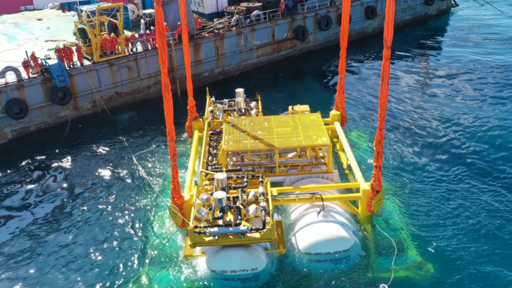
That’s true too, but the impact will be very very local. Really, we just need to have fewer data centers, but at least by putting them in the ocean we are only impactfully warming probably less than 300 cubic meters of water instead of an entire neighborhood, or depleting groundwater to cool the damn things. Seems like the least harmful way to cool them, if we’re going to have them.
This is slightly off topic but when our local NPP was operational the lake that they used as heatsink would never freeze over even in the coldest winters. Of course it’s not a huge lake.


That’s true, but water is so much more effective at absorbing heat than air, the effect will be negligible. It takes about 4.2 megajoules to raise one cubic meter of water 1 degree C. That energy would raise over 3 cubic KILOMETERS of air 1 degree C.
Even putting data centers at the bottom of large lakes would be unlikely to have an effect. It will not be percetable in the ocean. Regarding temperature anyway, other factors are worth considering.
The total effect is negligible, but even with high conductivity, local impact could be destructive enough. Even with an infinitely large copper pan, I wouldn’t put my hand on the part that’s on a stove’s burner.
That’s true too, but the impact will be very very local. Really, we just need to have fewer data centers, but at least by putting them in the ocean we are only impactfully warming probably less than 300 cubic meters of water instead of an entire neighborhood, or depleting groundwater to cool the damn things. Seems like the least harmful way to cool them, if we’re going to have them.
Yeah, fully agree.
This is slightly off topic but when our local NPP was operational the lake that they used as heatsink would never freeze over even in the coldest winters. Of course it’s not a huge lake.