

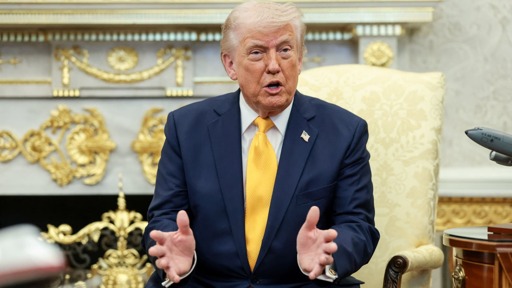
Donald Trump on Tuesday told CNBC that he will gratefully “remember” U.S. companies that do not seek refunds for the tariffs he unilaterally imposed, which the Supreme Court later ruled were illegal.
Trump’s comment on “Squawk Box” came a day after U.S. Customs and Border Protection opened a portal for importers to seek more than $160 billion in potential refunds for the so-called IEEPA tariffs.
He was asked about a number of large companies, among them Apple and Amazon, that have not filed requests for refunds for the tariffs they paid, potentially because they are worried about “offending” Trump.
Back in 2018, there was already evidence companies were using tariffs as cover to jack prices up beyond the tariff itself. An AEA study found washing machine prices went up almost 12%, and dryers went up about the same amount even though dryers were not tariffed. Once you include dryers and domestic brands too, prices rose by more than the tariff alone would explain.
https://www.aeaweb.org/articles?id=10.1257%2Faer.20190611
And this is not just old news. In a 2025 New York Fed survey, about three quarters of firms said they passed tariff costs on to customers, and some said they also raised prices on goods that were not even tariffed. The Fed’s Beige Book flat out said some of the price hikes were not just from tariffs or higher costs, but from “opportunism.”
https://www.reuters.com/world/us/ny-fed-survey-last-month-most-firms-passed-some-tariff-surge-2025-06-04/
By 2026, the Fed was saying pass-through was basically complete. One Federal Reserve note found the tariffs put in place through November 2025 had raised core goods prices by 3.1% by February 2026. Another found both imported goods and domestic goods got more expensive after the 2025 tariff announcements.
https://www.federalreserve.gov/econres/notes/feds-notes/the-slow-climb-how-tariffs-gradually-raised-retail-prices-in-2025-20260305.html
https://www.federalreserve.gov/econres/notes/feds-notes/detecting-tariff-effects-on-consumer-prices-in-real-time-part-II-20260408.html
And of course, once prices go up, companies are not eager to bring them back down. Reuters reported in February 2026 that businesses were unlikely to lower prices even after tariff relief, and were more likely to use that relief to offset other costs and chase refunds instead.
https://www.reuters.com/world/us/dont-bet-on-lower-prices-businesses-say-even-after-emergency-trump-tariffs-were-2026-02-24/
I know of some companies that didn’t raise prices or only raised them a small amount, but all the ones I heard of were mostly small companies making specialized products and depended on the loyalty of their customers.